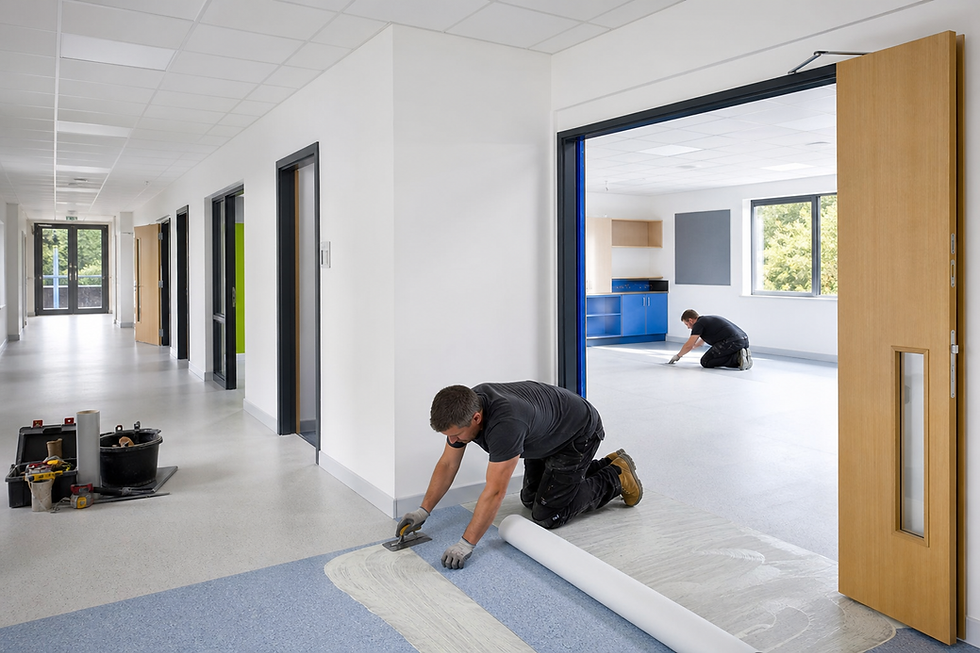
Office Dilapidation Flooring Works: What Tenants Should Plan Before Lease-End

Office dilapidation flooring works are often underestimated until an office move is already under way. By that stage, worn finishes, hidden adhesive, damaged subfloors and landlord deadlines can turn a seemingly simple handback into a rushed final-week problem. If your lease is coming to an end, flooring should be planned early, not left until after strip-out.
For office tenants, facilities teams and property managers, the priority is not simply choosing a new finish. It is understanding what must be reinstated, what condition the existing floor is in, and how the work will fit around move-out, access restrictions and the final handback date.
At Hilcrest Flooring Solutions Ltd, we support commercial clients with dilapidation works, consultancy work, floor surveys, sub floor preparation and commercial flooring installation. Based in Midlands, we work across the UK to help clients plan flooring works with greater clarity before lease-end deadlines start to tighten.
How to plan office dilapidation flooring works without last-minute surprises
Good lease-end planning starts with the scope, not the product. In many offices, flooring is tied to other reinstatement items such as partition changes, furniture removal, decorations and general strip-out. That means one flooring decision can affect several other parts of the programme.
Start with the lease and reinstatement documents
Before any flooring work is priced or scheduled, review the documents that define your obligations. These can include the lease, any licence for alterations, a schedule of condition and any landlord or building management correspondence relating to dilapidations.
Key questions to clarify early include:
Does the office need like-for-like reinstatement, or will an agreed alternative be acceptable?
Is the issue localised damage, or is the landlord likely to assess the floor as a whole?
Have alterations, removed partitions or layout changes left visible floor breaks that need addressing?
Are there access windows, lift restrictions or out-of-hours rules for the building?
Will the floor need to be handed back in a clean, consistent and fully serviceable condition?
These points can materially affect the scope. A tenant who assumes a small patch repair will be acceptable may later find that broader replacement or reinstatement is expected once the office is inspected properly.
Define the handback standard before ordering materials
Not every office requires a full refit at lease-end, but equally, not every old floor can be left in place. The right approach depends on condition, appearance, consistency and the landlord's expectations. Agreeing the standard first helps avoid ordering materials too soon or programming work that later needs to change.
What should be assessed on site before lease-end flooring works?
A proper site assessment helps separate what is visible from what may become a problem once the existing finish is lifted.
Existing floor finish and wear patterns
Office flooring may include carpet tiles, vinyl, LVT or other commercial floor finishes. During a lease-end assessment, it is important to establish:
What flooring types are present in each area
Whether damage is isolated or widespread
Whether there are stained, worn or mismatched sections
How entrances, circulation routes, meeting rooms and breakout areas have worn differently
Whether earlier repairs have already affected the floor's overall appearance
A handback decision is often influenced by the consistency of the finished space, not just by whether a few damaged tiles exist in isolation.
What sits beneath the floor
One of the biggest lease-end risks is assuming the visible floor finish tells the full story. Once coverings are removed, issues such as old adhesive residues, uneven areas, surface damage or other subfloor defects can affect what happens next.
This is why early commercial floor surveys are so valuable. A survey helps identify likely preparation requirements before your programme becomes compressed. Where needed, we can also advise on subfloor preparation so the floor is suitable for the next stage of works.
Access, occupation and programme constraints
Some offices are already empty when dilapidation works begin. Others remain partly occupied until late in the process. Access planning matters because it influences sequencing, labour, waste removal and the practical order of works.
Points to check include:
Whether floors need to be completed in phases
Lift and loading bay access
Out-of-hours or weekend working requirements
Waste removal routes through shared parts of the building
Coordination with decorators, electricians, furniture removals or other contractors
When these details are left unresolved, flooring works can be delayed even when materials and labour are ready.
Common lease-end mistakes that can derail flooring programmes
We often see the same issues create pressure for tenants and property teams during office handback projects.
Leaving the survey too late. Once the move-out date is close, there is far less room to respond to hidden preparation needs.
Assuming repair will be enough. A localised fix may not satisfy the required handback standard if the wider floor looks inconsistent.
Ordering replacement flooring before the base is assessed. Subfloor condition can affect both timing and specification.
Forgetting curing and access time. Flooring works are not only about fitting; the wider programme still needs to allow for preparation, sequencing and completion.
Failing to coordinate other trades. Late joinery, decorations or removals can damage newly completed flooring or stop installers accessing the area at the right point.
Most of these problems are avoidable with earlier planning and a realistic scope.
Repair, replacement or full reinstatement?
There is no single answer for every office. The right solution depends on the lease position, the landlord's expectations, the existing floor condition and whether a matching, practical result can be achieved.
When a localised repair may be suitable
Targeted repair can be appropriate where damage is limited, the surrounding floor remains in good condition and the finished result will still look consistent. This is usually more realistic when the affected area is well defined and compatible materials are available.
When partial replacement makes more sense
In some offices, one floor zone may need more attention than another. For example, a high-traffic open-plan area may be heavily worn while surrounding rooms remain serviceable. In these situations, a controlled partial replacement may be the most practical approach if the finished space still meets expectations.
When full replacement or reinstatement is the safer route
Full replacement is more likely to be needed when the floor is generally at the end of its serviceable life, when earlier alterations have left obvious visual breaks, or when the landlord expects a cleaner and more uniform handback condition.
Lease-end projects also sometimes require change of tenant flooring works rather than a direct like-for-like replacement. Where that applies, the key is to establish what has been agreed before works begin.
Important: whether flooring must be replaced, repaired or reinstated will depend on the lease and the wider dilapidations position. Flooring advice should sit alongside advice from the appropriate property professionals where needed.
How to build a realistic programme for office dilapidation flooring works
Every building and lease-end programme is different, but a structured approach usually gives tenants more control.
Review the documents. Confirm what the office handback is likely to require and identify any landlord or managing agent constraints.
Arrange an early site assessment. Use a survey to understand the existing finish, likely preparation and realistic scope before committing to dates.
Price the correct solution. Base the budget on the actual condition of the floor and the handback requirement, not on assumptions.
Coordinate the programme. Make sure strip-out, decorations and flooring are sequenced logically so one trade does not undo another's work.
Allow time for completion and sign-off. Leave room for final checks and any minor finishing items before the lease-end deadline.
The earlier this process begins, the more options you normally have. Late decisions often reduce the scope for efficient phasing and can place unnecessary pressure on everyone involved.
Why businesses choose Hilcrest Flooring Solutions Ltd
We provide a complete commercial flooring service, from initial consultation and site surveys through to supply, installation and completion. For lease-end projects, that joined-up approach is valuable because flooring decisions rarely sit in isolation.
Hilcrest Flooring Solutions Ltd situated in the Midlands, supports projects across the UK. Our services include commercial flooring, dilapidation works, consultancy work, floor surveys, carpet tiles, LVT flooring, safety flooring and sub floor preparation.
UK-wide commercial flooring support
Experience across office and other commercial environments
Many years' experience
Fully trained staff
Fully insured
Constructionline accredited
If you need practical support with dilapidation works, we can help you understand the flooring scope before lease-end pressure starts to build.
Arrange a dilapidation flooring survey before your deadline
If your office lease is ending, do not wait until the final weeks to investigate the floor. An early review can help you understand whether the space needs repair, replacement, reinstatement or more substantial preparation beneath the surface.
To discuss office dilapidation flooring works, call Hilcrest Flooring Solutions Ltd on 0116 271 5550, email info@hilcrestflooringltd.com or visit our website to arrange a survey and practical advice on the work needed before handback.
Frequently asked questions
What are office dilapidation flooring works?
Office dilapidation flooring works are the repair, replacement or reinstatement works that may be needed to address flooring issues at the end of a lease. The scope depends on the lease, the condition of the floor and what has been agreed for handback.
When should tenants start planning office dilapidation flooring works?
As early as possible. Starting early gives you time to review documents, assess the floor properly, understand subfloor risks and coordinate the programme with other lease-end works.
Do tenants always have to replace office flooring at lease-end?
Not always. Some offices may only need targeted repair, while others may require broader replacement or reinstatement. The answer depends on the legal and practical handback requirement, not just on whether the floor still appears usable.
Why is a floor survey important before lease-end?
A floor survey helps identify the existing floor build-up, likely preparation needs and potential hidden issues before works start. That makes it easier to plan timescales, budget and access arrangements with fewer surprises.
Can subfloor condition affect office handback works?
Yes. Once the existing finish is lifted, problems beneath the surface can affect the time, scope and suitability of replacement flooring. That is why subfloor assessment is an important part of lease-end planning.
Conclusion
Office dilapidation flooring works are far easier to manage when they are planned early and based on the real condition of the floor, not assumptions. If you need a clearer view of what your office handback may involve, Hilcrest Flooring Solutions Ltd can help you assess the scope, programme the work and move towards lease-end with greater confidence.